Monday, May 24, 2010

Writing Dictators


Generally, writers are pretty egotistical. They are power hungry, self-appointed dictators, and I will explain why. Writers take great delight in being the ruler of their own little world.

Yesterday, I was wrestling with a problem in my book. I couldn't decide if I wanted to give a certain idiosyncrasy to my main character or to a sub-character. I thought, "Gee, if I give this trait to Elle, then anyone of her particular race would have to have it as well." But, then, it struck me. I am in charge. This is a fictional land, and nobody HAS to be anything I don't want them to be. It really was a very freeing thought!

However, no matter how "in control" of my story I am, my dearly beloved characters somehow always create problems for me. After reading through earlier chapters in my book, I realized that the prince is kind of manic-depressive. Not exactly a charming characteristic. But, that's what editing is for, right?


Novel update: Finished chapter 14 today. There wasn't much there from the first draft, so I had to construct most of it from scratch! 220 days remaining! Can she do it, ladies and gentlemen??

Friday, May 21, 2010

My Boss is Ten Years Old

Writers never like to think of themselves as having a boss. They like to be in control, and that's why they write. But the reality is, a writer has three bosses (which is three times the amount they first thought they had...oh, dear!). A writer's publisher tells them what to do. A writer's editor instructs them on what to say and how to say it. But these are merely the "assistant managers", if you will, to the real boss - a writer's audience.

Many writers have a vague, surreal sort of relationship with their audience. Most have never actually been introduced to their audience, and usually, like some crazy infatuation, have placed their fans on a high pedestal - assuming them to be greater, grander, and all around much more impressive than they really are. Audiences come from all walks of life - they may be doctors and scientists, or homemakers and children. As a writer, you don't choose your audience. Your audience chooses you. They sign off on your paycheck.

Though I imagine myself writing to both the young and old - entrancing the masses with my literary skill, I know this is mainly fantasy. My audience is just learning cursive, multiplication tables, and maybe a little long division. They don't know a simile from a smile. But they know an interesting story when they hear one. My boss is from eight to twelve. What they like to read, I like to write.

And the educated and open-minded may shout their praises from the rooftops about my work, but, at the end of the day, to hear, "Read me more!" from my ten-year-old cousin is the sweetest music to my ears. My job is complete.


Novel update: Haven't written anymore just yet.... Getting to it soon! 223 days to go!

Thursday, May 20, 2010

Novel Discoveries


I finished my 107th page today of A Tale of the Faeries (yes, it is only a working title)! And, by this time, I have come to discover there can be complications in a book containing both giants and humans, and there definitely is such a thing as "too much magic".

The giant-human problem is not an unsolvable one. Merely difficult, and incredibly annoying. Because, when you have a human as large as a giant's thumb, you begin to have perspective/proportion issues, especially if the human is completely thrown into giant land. It's hard to remember to keep doors immensely tall, chairs huge, and what to do about food? Should it be normal-sized, in massive quantities? Or massive-sized, in normal quantities? Should carrot sticks be seven feet tall? Plus, it's such a trial to have giants make eye contact with humans. Almost always, the giants have to hold the humans in their hand to have a natural, face-to-face conversation. But, as I said, not unsolvable...

And then the issue of "too much magic"... In my story, giant land is swathed in magic. Everything is magical. However, I don't want to work under the concept that "anything is possible". Because, if it was, my main characters would have instantly been killed off, and the story would have ended at page seventy-two. I need just enough magic to make things "magical", but not enough to make everyone all powerful.

Just a few things I'm mulling over...

Novel update: 13 chapters finished, 224 days to go.

Wednesday, May 12, 2010

Describing the Indescribable

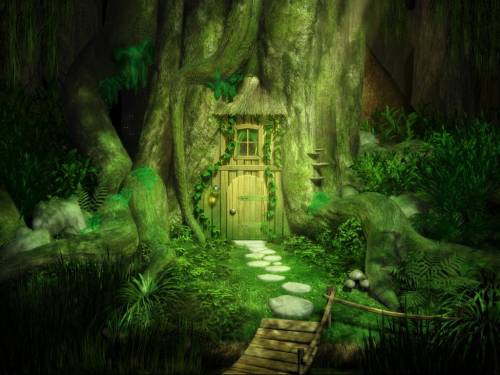
The only issue with writing fantasy is you must write more description than you would for non-fiction. Otherwise, no one has any idea what you're talking about, and poor confused readers end up imagining the scenery all wrong.

But how does one write a compelling description, without boring their flower-and-fauna-overdosed audience? There is such a problem as too much description. Where is the dialogue? Where is the action? Where is my lunch? And my homework? And now...the reader has willingly left fairyland far behind, uncertain to ever return.

Since I'm writing a first-person novel, I often have a strong desire to make Elle (my main character) describe certain pieces of scenery as "indescribable", such as "the indescribable beauty of the forest". An obvious (and incredibly lame) excuse for not describing the indescribable. The readers want to know what is so indescribable about the forest, but their curiosity goes only so far... They don't really care about the particular shade of the tree bark.

It's all about putting a little effort into a balancing act between dialogue and description to maintain the magic and keep readers interested. And it's difficult. Description has never been a good friend. I much prefer dialogue, and funny sarcastic asides...


Novel Update: 11 chapters finished, 70 pages complete. 232 days to go!